Basic Information
| Field | Details |
|---|---|
| Full name | Hedwig Hensel, later Hedwig Höß |
| Birth date | 3 March 1908 |
| Birth place | Oberneukirch, Saxony, Germany |
| Death date | 15 September 1989 |
| Death place | Arlington, Virginia, United States |
| Spouse | Rudolf Höss |
| Marriage date | 17 August 1929 |
| Children | Klaus, Heidetraud, Ingebrigitt, Hans-Jürgen, Annegret |
| Known for | Being the wife of Rudolf Höss, the Auschwitz commandant |
Who Hedwig Hensel Was
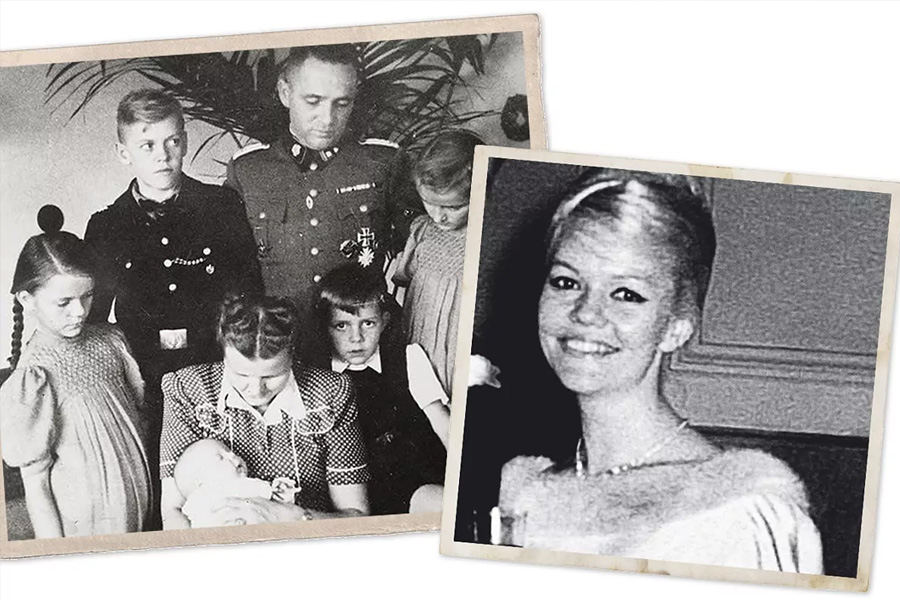
I think Hedwig Hensel was one of history’s most terrible supporting people, a woman whose private life became entangled in the worst industrial system. Hedwig Höß was born in Saxony in 1908 and married Rudolf Höss in 1929. Her name is not as well-known as her husband’s, although she was close to the Holocaust. She reared children at the camp commandant’s home near Auschwitz in a home where comfort and tragedy coexisted.
Hers is not a public power narrative. She was unelected. She led no group. She maintained home order in a cruel environment. That matters. Homes may be engines. Her family home near Auschwitz was a polished mask over a horrible visage.
Early Life and Background
Hedwig Hensel was born on 3 March 1908 in Oberneukirch, in what was then the German Empire. Her parents were Ostwald Richard Hensel and Linna Florendine Hensel, née Kremtz. She also had at least one brother, Gerhard Fritz Hensel, and a sister, Luise Hensel.
I do not see the kind of rich childhood narrative that survives for famous artists, politicians, or writers. Her early life is mostly a prelude. Yet even that prelude mattered, because it led her into the circle of the Artaman movement, a rural, nationalist, and ideologically charged environment that shaped her future marriage. In that setting, she met Rudolf Höss.
The date is important. On 17 August 1929, she married him. That was the hinge. After that, her life moved from private biography into the current of one of history’s most terrible systems.
Marriage to Rudolf Höss
Hedwig’s marriage to Rudolf Höss defined nearly everything that came after. Rudolf would become the longest serving commandant of Auschwitz, a name associated with industrialized murder. Hedwig, meanwhile, became the woman at his side, first in the countryside and later at the camp itself.
Their life together began before Auschwitz. In the 1930s, the family lived at Gut Sallentin in Pomerania. Hedwig raised children there while Rudolf advanced inside the Nazi system. Then, in 1940, the family moved into the villa beside Auschwitz I. That house is one of the most chilling domestic spaces in modern history. It was a family home with a garden, children, meals, clothing, routines, and ordinary weather. Yet just beyond it, mass murder was being organized.
That contrast feels almost like a split screen. On one side, a mother tending a household. On the other, a camp built on extermination. Hedwig lived where those two realities touched.
The Household at Auschwitz
Hedwig is often remembered for the domestic life she maintained at Auschwitz. She managed the home, and the home depended on coercive labor. Prisoners and forced laborers helped with domestic tasks and gardening. Two Polish seamstresses were employed in the household. A sewing room was established so women could make clothing for SS families.
This is where her life becomes morally heavy. The villa was not a neutral family space. It was part of the camp ecosystem. Comfort for the Höss family rested on exploitation. The garden, the sewing, the meals, and the daily order were all made possible by a system that destroyed others.
I cannot treat that as a minor detail. It is central. Hedwig’s domestic world was stitched together with the same thread that bound the wider camp system. The ordinary and the obscene lived under one roof.
Family Members and Personal Relationships
Rudolf Höss
Rudolf Höss was Hedwig’s husband and the most infamous member of the family. He became the Auschwitz commandant and later one of the key figures in Nazi genocide. Their marriage linked Hedwig directly to the machinery of the camp. He was not merely a spouse in the background. He was the axis around which her public historical identity now turns.
Klaus Höß
Klaus was their eldest child, born on 6 February 1930. Later life took him far from the villa, and he eventually died in Australia in 1987. He also appears in postwar family history as someone who helped bring his mother and siblings back to Stuttgart after the war.
Heidetraud Höß
Heidetraud was born on 9 April 1932. Her public biography is sparse, but her place in the family is fixed. She was one of the children who lived in the household beside Auschwitz.
Ingebrigitt Höß, also known as Brigitte
Ingebrigitt was born on 18 August 1933. She later lived in the United States and worked for many years in fashion. She became one of the most visible children of the family in later interviews and documentaries, especially when people began asking how a child of the Höss household understood the past. Her life shows how the shadow of one generation can stretch across an ocean.
Hans-Jürgen Höß
Hans-Jürgen was born in May 1937. He has appeared in recent documentary discussion and public reporting. He is one of the family members who helped bring the Höss story back into present-day conversation. His testimony and reflections matter because he represents the later echo of the household, the line where memory and inheritance meet.
Annegret Höß
Annegret, born on 7 November 1943, was the youngest child. She came into the world near the end of the war years, when the family’s world was beginning to collapse. Like some of her siblings, she remains less documented than the adults around her, but she belongs to the core family circle.
Gerhard Fritz Hensel
Gerhard Fritz Hensel was Hedwig’s brother. He was a painter, born in 1910, and later worked in northern Germany. His life is important because it shows that Hedwig’s family was not confined to the role of a camp household alone. He had his own artistic path. He also remained connected enough to the family that he visited Auschwitz. That detail adds another layer to the picture. Her family network did not float above history. It passed through it.
Linna Florendine Hensel and Ostwald Richard Hensel
These were Hedwig’s parents. Their names matter because they root her in a real family line, one that existed before the marriage, before Auschwitz, before the historical darkness consumed her public identity. Beyond that, the record is thin, and that thinness itself is telling. Hedwig’s life survives in fragments, as if history preserved the hardest outline and let the rest fade.
Later Life and Final Years
After WWII, Höss family evacuated and scattered. Hedwig testified in 1964 at the Frankfurt Auschwitz trial. That evidence portrayed her as a Ludwigsburg homemaker and widow. For someone so near to such amazing wickedness, such self-description is almost painfully ordinary.
Later, she lived in Arlington, Virginia, where she died on September 15, 1989. Her lengthy life finishes far from Auschwitz, but not without value.
Why Her Story Still Matters
I think Hedwig Hensel matters because she reminds me that genocide is never only carried out by uniforms and orders. It also survives through homes, marriages, routines, kitchens, laundry, gardens, and silence. Her life sits in that uncomfortable place where private loyalty and public atrocity overlap.
She was not the architect of Auschwitz. She was not the commander. But she was close enough to the center that her life became part of the camp’s domestic shadow. Her biography is a hard lesson in how the ordinary can be bent into service of the unthinkable.
FAQ
Who was Hedwig Hensel?
Hedwig Hensel was a German woman born in 1908 who became Hedwig Höß after marrying Rudolf Höss, the Auschwitz commandant. Her historical significance comes mainly from her role as his wife and the mother of their children.
How many children did Hedwig Hensel have?
She had five children: Klaus, Heidetraud, Ingebrigitt, Hans-Jürgen, and Annegret. Their births span from 1930 to 1943.
Did Hedwig Hensel have a career?
She does not appear to have had a separate public career. She is mainly described as a housewife who managed the family household, including during the years at Auschwitz.
Where did Hedwig Hensel live after the war?
Later records place her in Ludwigsburg, and she ultimately died in Arlington, Virginia, in 1989.
Why is Hedwig Hensel remembered today?
She is remembered because her life was closely tied to Rudolf Höss and to the domestic world surrounding Auschwitz. Her story shows how family life can exist inside a system of mass murder without being innocent of it.
When Does A Cash Home Sale Become The Better Option
How To Build Better Employee Wellness Programs That Work
The Ultimate Guide To Healthcare Equipment Lifecycle Management For Practice Managers
How Fast Door Frame Delivery Helps Keep Construction Projects On Schedule
Lab Outreach Software Compared 9 Physician Ordering And Results Portals